Karnataka: In a meaningful step towards advancing sustainable development and inclusive growth, CBM India has successfully implemented a comprehensive community development initiative across parts of Tamil Nadu, Madhya Pradesh, and Karnataka. Supported by a corporate donor’s CSR program, the project focuses on improving access to clean energy and cooking methods, safe drinking water, and quality education, particularly for marginalized and indigenous communities.
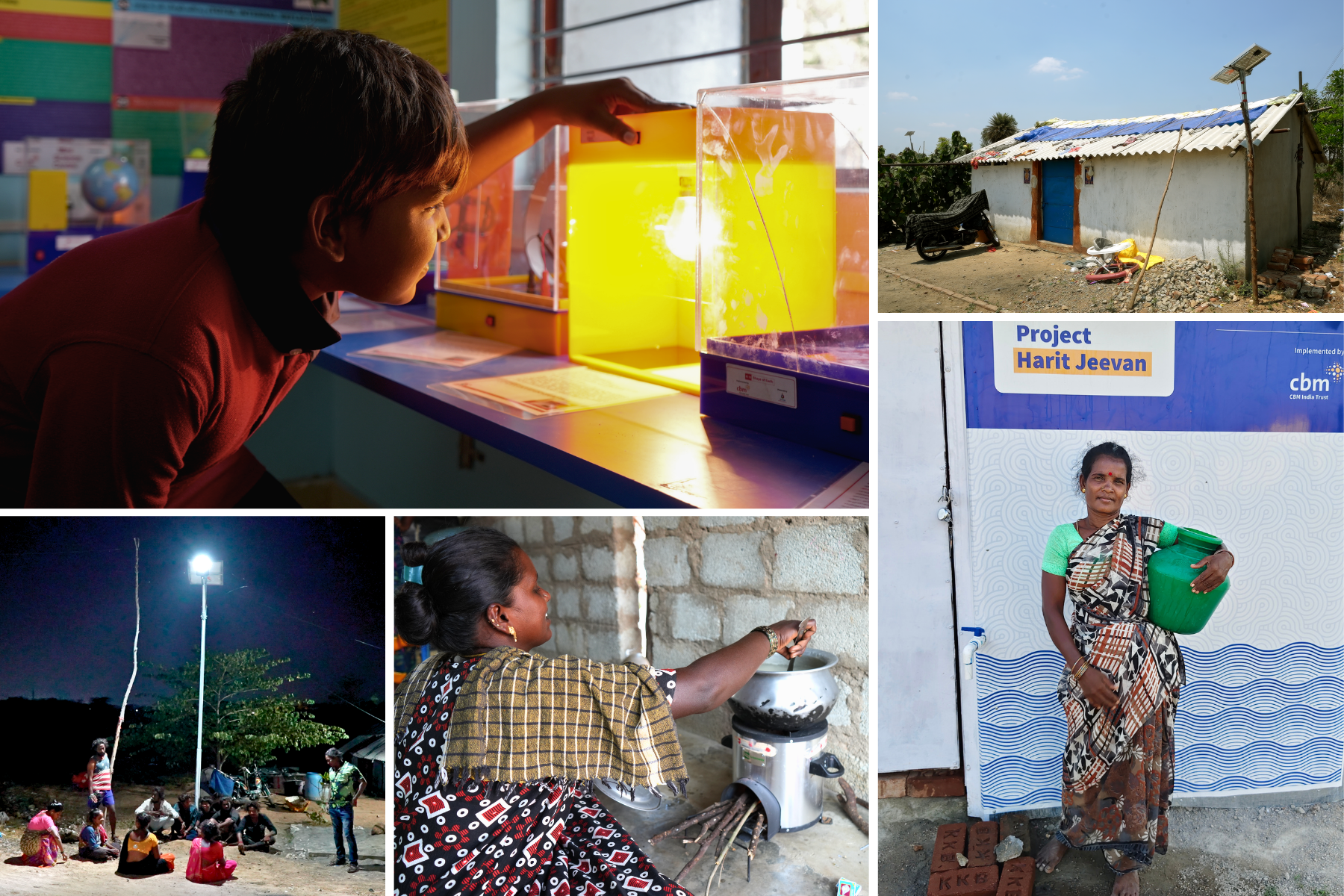
As part of the program, over 560 improved cookstoves have been distributed in the Tiruvallur and Arakkonam blocks of Tamil Nadu, significantly reducing indoor air pollution and improving household health conditions. Women and children, who typically spend the most time in the kitchen and are therefore most exposed to harmful smoke, are expected to benefit the most. Because improved cookstoves burn fuel more efficiently, families require less firewood, easing the burden of collection that falls primarily on women and girls and freeing up time they can devote to education and other economic activities.
To address energy access needs, 100 household solar lighting systems have been installed, giving families living in remote areas a steady and clean source of power for their daily needs. With dependable lighting at home, children can continue studying after sunset, and families no longer need to rely on kerosene lamps during power cuts. In addition, 10 solar-powered streetlights have been installed in villages, enabling community activities during evening hours and improving safety for residents.
Alongside energy and health, the initiative is also investing in education. 8 STEM labs have been set up in government schools in Madhya Pradesh, Tamil Nadu, and Karnataka. These labs aim to promote hands-on learning, improve student engagement in science and technology, particularly among girls and students from marginalized communities, and encourage children to explore future career opportunities in these fields. This exposure helps bridge the gap between theoretical learning and practical understanding, especially for first-generation learners.
The program also addresses access to safe drinking water. 4 water ATMs have been installed in accessible points within villages in Tamil Nadu and Madhya Pradesh. Families that previously relied on unsafe water sources now have clean drinking water close to home, reducing the time spent collecting it. The intervention is also expected to lower the incidence of waterborne diseases and, over time, help reduce household medical expenses.

Speaking on the initiative, Sony Thomas, Executive Director, CBM India Trust, said, “Sustainability was at the heart of how we designed this program. We chose to work with government schools, public infrastructure, existing community spaces, instead of building parallel systems. If this program ends tomorrow, the STEM labs are still in those schools, the solar lights are still powering homes, and the water ATMs still serve those villages.”
By addressing fundamental needs, such as clean energy and cooking methods, education, and safe drinking water, the program is laying the groundwork for healthier, safer, and more resilient communities across rural Tamil Nadu, Karnataka, and Madhya Pradesh.



 ---------------------------------------------------------------------------------------------------